
Key Points
- Following the November 3, 2026 midterm elections, the Texas State Board of Education (SBOE) flipped from an 11-4 Republican majority to an 8-7 Democratic advantage—ending more than three decades of Republican control since 1994.
- Longtime Aldine ISD teacher Michelle Palmer, who previously lost SBOE bids in 2020 and 2022, won her seat alongside fellow Democratic newcomers Thomas Ray Garcia, Correta Mallet-Fontenot, Allison Bush, and Dana Van de Walker, joining re-elected incumbent Tiffany Clark and two sitting Democrats.
- Palmer stated that her top priority upon taking office on January 25, 2027, is to reverse controversial social studies curriculum rewrites approved earlier in 2026—changes critics argue infused Christian nationalist ideology and Bible texts into public education whilst marginalising minority histories.
- The broader Texas “blue wave” also saw Democrats flip the Texas House of Representatives, win the governorship with Governor-Elect Gina Hinojosa, and elect Lieutenant Governor-Elect Vikki Goodwin, prompting immediate legislative filings to repeal school vouchers and boost public school funding.
- Advocacy groups, including the Houston American Federation of Teachers and the Texas Freedom Network, praised the election outcome as a voter mandate to restore historical accuracy and safeguard the separation of church and state in Texas classrooms.
Austin (Edition America) November 16, 2026 – Significant changes are anticipated for Texas public school curricula after voters flipped the Texas State Board of Education (SBOE) to an 8-7 Democratic majority during the November 3, 2026 midterm elections, ending 32 years of continuous Republican control. As reported by April Towery of the Houston Press, newly elected board member and veteran public school teacher Michelle Palmer intends to prioritise undoing controversial social studies and reading list revisions adopted earlier this year before they take effect in 2030. Joined in Austin by four newly elected Democratic colleagues, Palmer and public education advocates are preparing to reshape state educational standards whilst navigating persistent ideological divisions on the panel.
- Key Points
- How Did the November 3 Election Shift Control of the Texas State Board of Education?
- Why Are Newly Elected Board Members Seeking to Undo Recent Curriculum Rewrites?
- What Have Education Leaders and Watchdog Groups Said About the Election Results?
- How Does the Broader Texas Political Shift Affect School Policy and Vouchers?
- Background of the Texas State Board of Education’s National Textbook Influence
- How Could the SBOE Curriculum Overhaul Affect Students, Educators, and Textbook Publishers?
How Did the November 3 Election Shift Control of the Texas State Board of Education?
The November 3, 2026 election transformed the 15-member Texas State Board of Education from an 11-4 Republican majority into an 8-7 Democratic majority, marking the first time Democrats have held control since 1994.
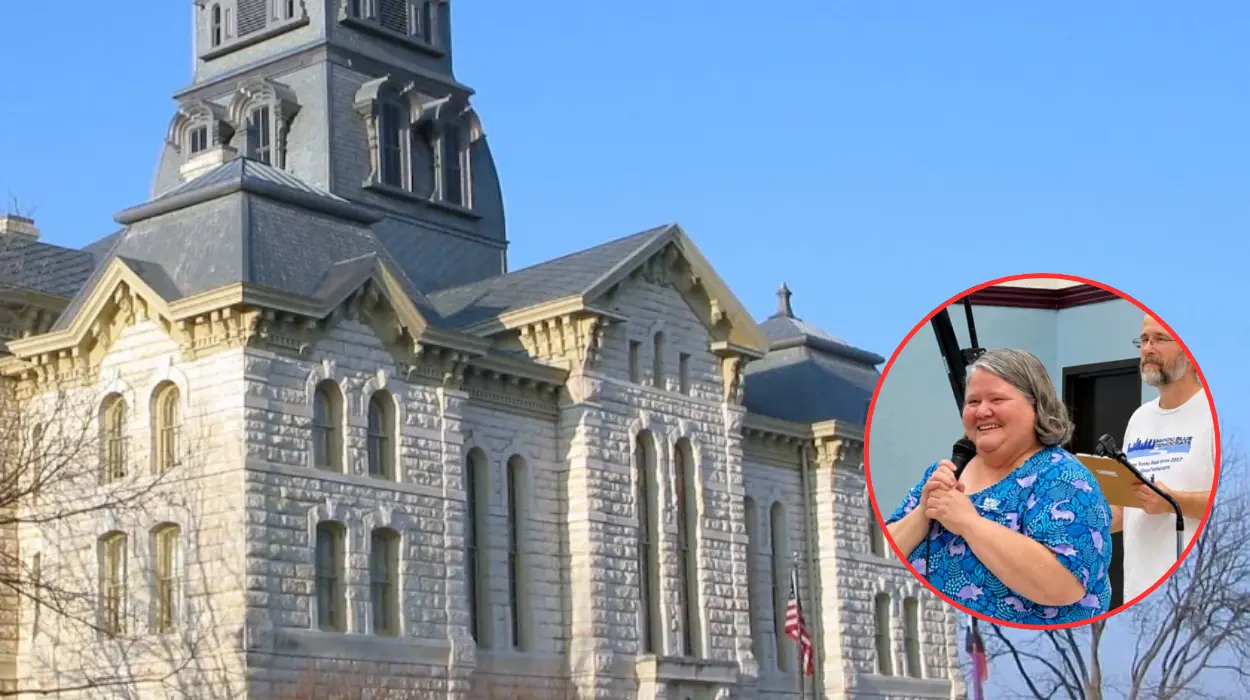
Michelle Palmer, a 56-year-old U.S. history and government teacher at Aldine Independent School District (ISD) who has taught in Texas public schools since 2009, secured victory on November 3 after unsuccessful campaigns in 2020 and 2022. She previously worked for Houston ISD before resigning in 2019 prior to the state takeover of the district.
As reported by April Towery of the Houston Press, Palmer will be joined in Austin by newly elected Democratic board members Thomas Ray Garcia, Correta Mallet-Fontenot, Allison Bush, and Dana Van de Walker. Democrat Tiffany Clark was re-elected to her District 13 seat, joining two other incumbent Democrats already serving on the panel. In District 8, Van de Walker defeated Republican incumbent Audrey Young by 569 votes—a margin narrow enough to qualify for a recount, though Young did not file recount paperwork before Friday’s statutory deadline.
Despite the Democratic flip, ideological friction is expected to persist. Republican incumbent Julie Pickren—who critics describe as a hardline Christian nationalist and who participated in the January 6 U.S. Capitol breach—defeated Democratic challenger Tiffany Perkinz, a Port Neches English teacher, securing another four-year term. Following the election, Perkinz got a tattoo of Texas bluebonnets on her left arm and vowed to continue advocating at SBOE meetings in Austin.
The new SBOE members will be sworn in on January 25, 2027, ahead of a scheduled board meeting in Austin, with Governor-Elect Gina Hinojosa set to appoint the new board chair.
Why Are Newly Elected Board Members Seeking to Undo Recent Curriculum Rewrites?
Newly elected Democratic board members and education advocates argue that curriculum changes approved earlier in 2026 infuse Christian nationalist ideology into classrooms, distort historical accuracy, and marginalise non-Christian and minority students.
For months prior to the election, the SBOE held late-night hearings and received hundreds of hours of public testimony from teachers, parents, and students regarding updates to the Texas Essential Knowledge and Skills (TEKS) social studies standards and mandatory reading lists. Critics contended that board members backed by Christian nationalist political action committees were incorporating biblical texts as historical fact, promoting Islamophobic rhetoric, and minimising the realities of American slavery.
In a phone interview reported by April Towery of the Houston Press, Michelle Palmer stated: “The students of Texas deserve better. This is the most diverse state in the United States, and every single one of my students and all the students in Texas deserve to have a curriculum that doesn’t call them terrorists. They deserve to have truth in curriculum. They deserve to have their stories being told. Every group of people in this country helped to make Texas what it is.”
Because the controversial curriculum rewrites approved earlier in 2026 are not scheduled to take effect until 2030, Palmer noted that a comprehensive revision is achievable. “Whether we can do that at the January meeting, we’re trying to figure that out,” Palmer told the Houston Press. “It will definitely be happening in 2027. Different people want different things.”
Beyond removing religiously motivated revisions and restoring full historical coverage of slavery and Islamic culture, Palmer seeks to overturn a previous SBOE decision that mandated teaching social studies chronologically across grade levels. “I completely disagree with it,” Palmer stated, as reported by April Towery of the Houston Press. “An 8-year-old should not be learning about ancient history. They should be learning about their community. I want to undo that, which means the standards have to start over completely. Not everybody on the Democratic side is seeing it that way because it would take longer. They want to see us take out the most offensive stuff.”
Palmer acknowledged that she would defer to her Democratic colleagues if a majority preferred targeted revisions over a complete rewrite, though she warned: “If that’s the way the majority of the Democrats feel, I will try to talk them out of it, but I will accept it if I absolutely must. I don’t think it’s what’s best for the kids of Texas, and I think it will cause a lot of problems for a very long time.”
What Have Education Leaders and Watchdog Groups Said About the Election Results?
Public education unions and state watchdog organisations have characterised the election results as a direct mandate from Texas families to prioritise factual education over political ideology.
Support for an immediate curriculum review has come from major teachers’ organisations across the state. As reported by April Towery of the Houston Press, Houston American Federation of Teachers president Jackie Anderson stated: “They need to put back all of the things that have been removed unfairly. Texas history is Texas history, and it should not be whitewashed. Their priority should be to restore the curriculum and make sure the truth is taught to our children.”
Officials at the Texas Freedom Network (TFN), an Austin-based nonprofit formed in 1995 to monitor the SBOE, echoed this sentiment after conducting extensive voter outreach targeting low-propensity voters and hosting a symbolic “funeral for religious freedom” at the state Capitol in June 2026. As reported by April Towery of the Houston Press, TFN Director Felicia Martin stated: “The Republican Board didn’t listen, but as always, voters got the final say. We are fed up with political ideologies being put over the education of our kids, and families have made that mandate quite clear.”
TFN political director Rocío Fierro-Pérez noted that the outgoing board had conducted line-by-line edits of textbook standards to advance a cultural agenda. “The board has become more politically divisive,” Fierro-Pérez told the Houston Press. “There’s been this push to go far, far right. There’s a sense that if you’re not MAGA or a Christian nationalist, you’re not really a Republican. That is so concerning. That is making its way into our classrooms… It’s a personal thing that really belongs in the home or at Sunday school, not in public schools.”
Fierro-Pérez added that public education had become a “proxy fight over who gets to define American identity, and they’re embedding religion into that,” stating: “What’s happening more and more now is you’re getting people who are more extreme and are pushing an ideology… That’s what is so dangerous about politicians who are weaponizing religion. It’s political theater, and they’re playing with people’s lives.”
How Does the Broader Texas Political Shift Affect School Policy and Vouchers?
The SBOE flip coincided with a wider Democratic surge in Texas—including flipping the Texas House and winning the governor’s mansion—setting the stage for major legislative battles over school vouchers and public school funding.
All of the incoming Democratic SBOE trustees bring backgrounds in education, including community college administrator and former teacher Dana Van de Walker, and South Texas College professor and former high school teacher Thomas Ray Garcia, who has publicly opposed school voucher programmes and advocated for full public school funding.
While funding formulas and voucher legislation fall under the purview of the Texas Legislature rather than the SBOE, Palmer noted that state laws directly constrain what educators can teach in classrooms. “The state legislature can pass bills telling us what to do,” Palmer stated, as reported by April Towery of the Houston Press. “Remember when there was a big deal about Florida passing the ‘don’t say gay’ bill? Texas has had that for years. Teachers in the classroom are not allowed to teach gay civil rights. [State legislators] are the ones who say we can’t have comprehensive sex education.”
Following the broader November 3 “blue wave” that saw Democrats capture a majority in the Texas House alongside Governor-Elect Gina Hinojosa and Lieutenant Governor-Elect Vikki Goodwin, lawmakers have already pre-filed legislation aimed at repealing the state’s school voucher programme, increasing per-student funding allotments, transitioning school funding from attendance-based to enrolment-based metrics, and boosting Teacher Retirement System benefits. Furthermore, enforcement of a separate legislative mandate requiring donated Ten Commandments posters in public classrooms—which has faced lawsuits from Christian families and faith leaders—is expected to stall following the electoral defeat of many of its primary legislative backers.
Addressing criticism from opponents who accuse progressive educators of injecting politics into classrooms, Palmer emphasised her student-centred teaching methodology at Aldine ISD, which relies on primary document analysis, research presentations, and open Friday current-events discussions. “It’s a very student-centered way to teach,” she told the Houston Press. “They can take it in whatever direction they want. In my opinion, that’s the best way to teach. I think it’s wrong to infuse my politics in class.”
Harris County Democratic Party, Houston Progressive Caucus, and Houston Democracy Project founder Neil Aquino—who attended Palmer’s November 7 victory celebration at Chavez Mexican Cafe—praised her dedication. As reported by April Towery of the Houston Press, Aquino stated: “I can’t overstate the time and effort Michelle has put in for nearly a decade now standing up for good education in Texas and democracy. It’s hard to imagine someone more deserving of their win.”
Background of the Texas State Board of Education’s National Textbook Influence
The Texas State Board of Education wields outsized influence over public education far beyond state borders. Because Texas is one of the largest single purchasers of K-12 textbooks in the United States, publishing houses routinely tailor their national editions to meet the curricular standards adopted in Austin. As Texas Freedom Network Director Felicia Martin noted, whatever Texas approves or excludes from its curriculum effectively shapes textbook content for school districts across much of America.
Since Republicans secured a majority on the board in 1994, the SBOE has frequently served as a battleground over cultural, scientific, and historical standards. During the late 1990s and 2000s—notably under former chair Don McLeroy, a Bryan dentist appointed by then-Governor Rick Perry in 2007—the board drew national scrutiny over debates surrounding evolution versus creationism in science textbooks, an era chronicled in the 2012 documentary The Revisionaries. Although the Texas Legislature temporarily curtailed some of the board’s authority following those controversies, subsequent electoral cycles driven by the Tea Party and Christian nationalist political action committees—defined by watchdog groups and religious liberty organisations such as the Baptist Joint Committee for Religious Liberty and the National Council of Churches as a political movement seeking ideological control rather than religious freedom—reignited line-by-line ideological revisions of social studies and reading standards.
How Could the SBOE Curriculum Overhaul Affect Students, Educators, and Textbook Publishers?
The incoming Democratic majority on the Texas State Board of Education carries substantial long-term consequences for stakeholders across Texas and the broader American education sector:
- Texas K-12 Students and Families: With the 2026 curriculum rewrites halted prior to their scheduled 2030 implementation, millions of Texas public school students are expected to receive social studies and reading instruction that reflects multicultural perspectives, primary historical documentation, and church-state separation rather than religiously infused materials.
- Classroom Teachers and School Districts: Educators across districts such as Aldine ISD and Houston ISD gain clearer institutional backing to teach comprehensive historical subjects—including the history of slavery and diverse religious traditions—without fear of ideological censure, whilst potential legislative reforms in the Texas House could increase per-pupil funding and retirement benefits.
- National Textbook Publishers: Major educational publishers preparing materials for the 2030 adoption cycle will need to recalibrate their editorial frameworks to align with the revised Texas Essential Knowledge and Skills standards set to be drafted in 2027, indirectly influencing classroom materials distributed to school districts nationwide.